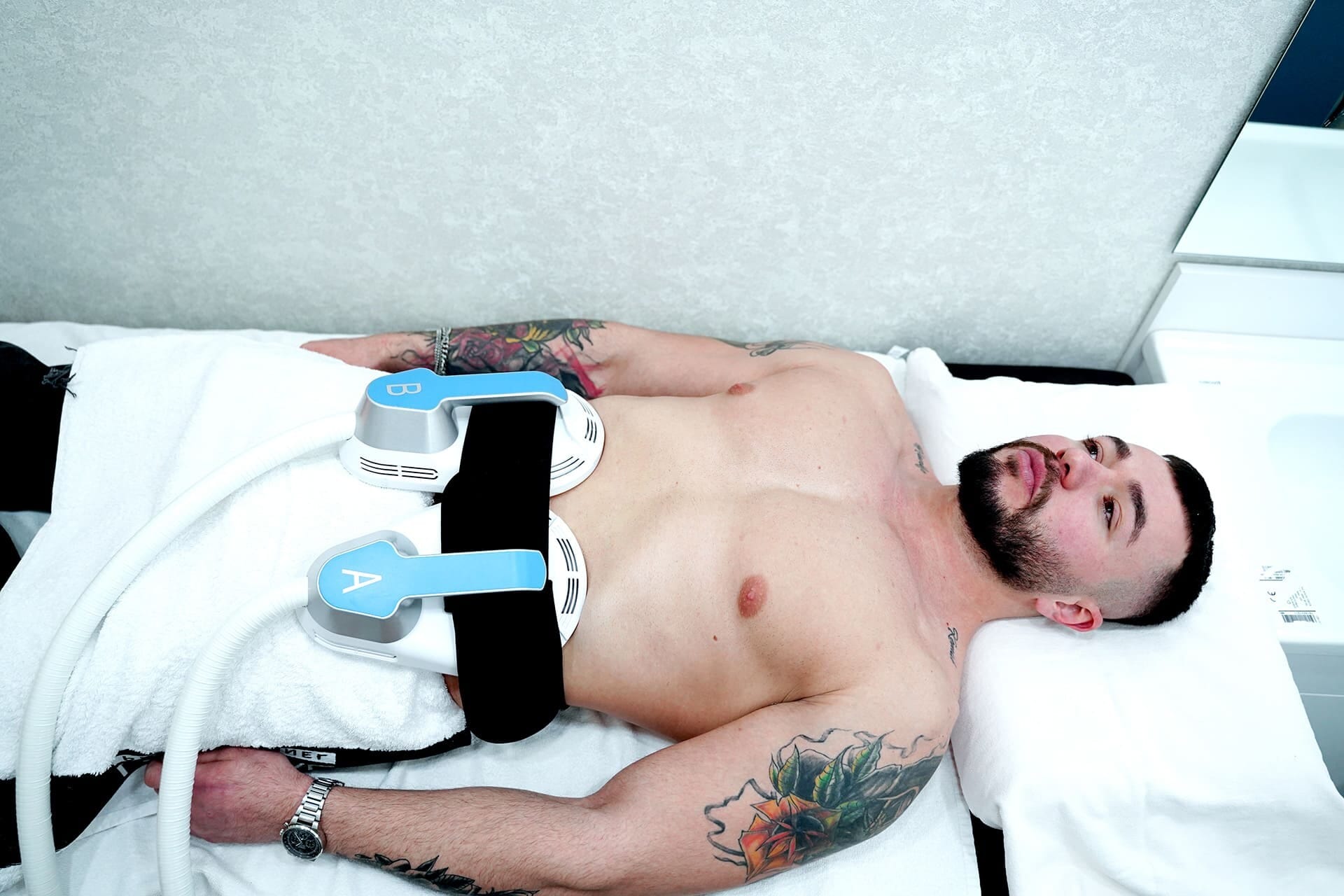
Short answer: Body-contouring treatments are cosmetic; they are not a weight-loss method or a medical therapy. Realistic expectations rest on three things: knowing from the outset what the treatment does and does not do, accepting that results differ from person to person, and recognising that the effect cannot be separated from daily habits such as diet, movement and sleep.
Scope and the cosmetic boundary
These are cosmetic services intended to support skin appearance and body contour. They do not aim to produce weight loss, treat adipose tissue or improve any health condition. Situations that require medical assessment fall outside the scope of a cosmetic service, and an appropriate referral is made.
Assessment beforehand
Before treatment, the area, skin condition, previous treatments, daily habits and expectations are discussed together. The purpose of that conversation is not to guarantee an outcome but to clarify whether the treatment suits the person and what can reasonably be expected.
Session planning and consistency
Expecting a lasting change from a single session is not realistic. Treatments are usually run as a series planned at set intervals, and keeping to those intervals directly affects the result. Irregular sessions make the appearance achieved harder to hold.
The part daily habits play
The effect of a cosmetic treatment cannot be judged apart from a person's eating pattern, water intake, activity and sleep. The treatment does not replace those habits; alongside a steady routine, however, it can create a more visible and more lasting impression.
When to seek professional advice
Pregnancy and breastfeeding, circulatory or skin conditions, active infection, an open wound, recent surgery or regular medication all require consulting a healthcare professional before starting a cosmetic treatment. Treatment should not continue where there is unexpected pain, swelling or colour change.
When is a professional assessment needed?
If there is an active infection, an open wound, marked sensitivity, a history of allergy, medication use or an unexpected reaction, consult a healthcare professional before any cosmetic treatment. This content is for general information and does not replace medical diagnosis or treatment.
Related guides
How does a skincare routine change with the seasons?
How do you assess hygiene in manicure and pedicure?